Kakobuy Climbing Shoes Spreadsheet Guide
Kakobuy Climbing Shoes Spreadsheet Guide
Climbing shoes can't be chosen just by looks, price, or everyday sneaker size. What really matters is foot shape, last, fit intensity, closure type, sole support, and actual climbing scenario. This guide helps you build a verifiable shortlist from relevant kakobuy Spreadsheet candidates on best-kako-buy.com, then finalize your order through product pages, seller descriptions, and warehouse QC photos.
This article is not for readers who need professional medical orthotic advice, must try on shoes before buying, or require confirmation of rubber compound, sole friction performance, and long-term durability. Spreadsheets and visual inspections cannot replace actual fitting, lab testing, or real climbing tests.
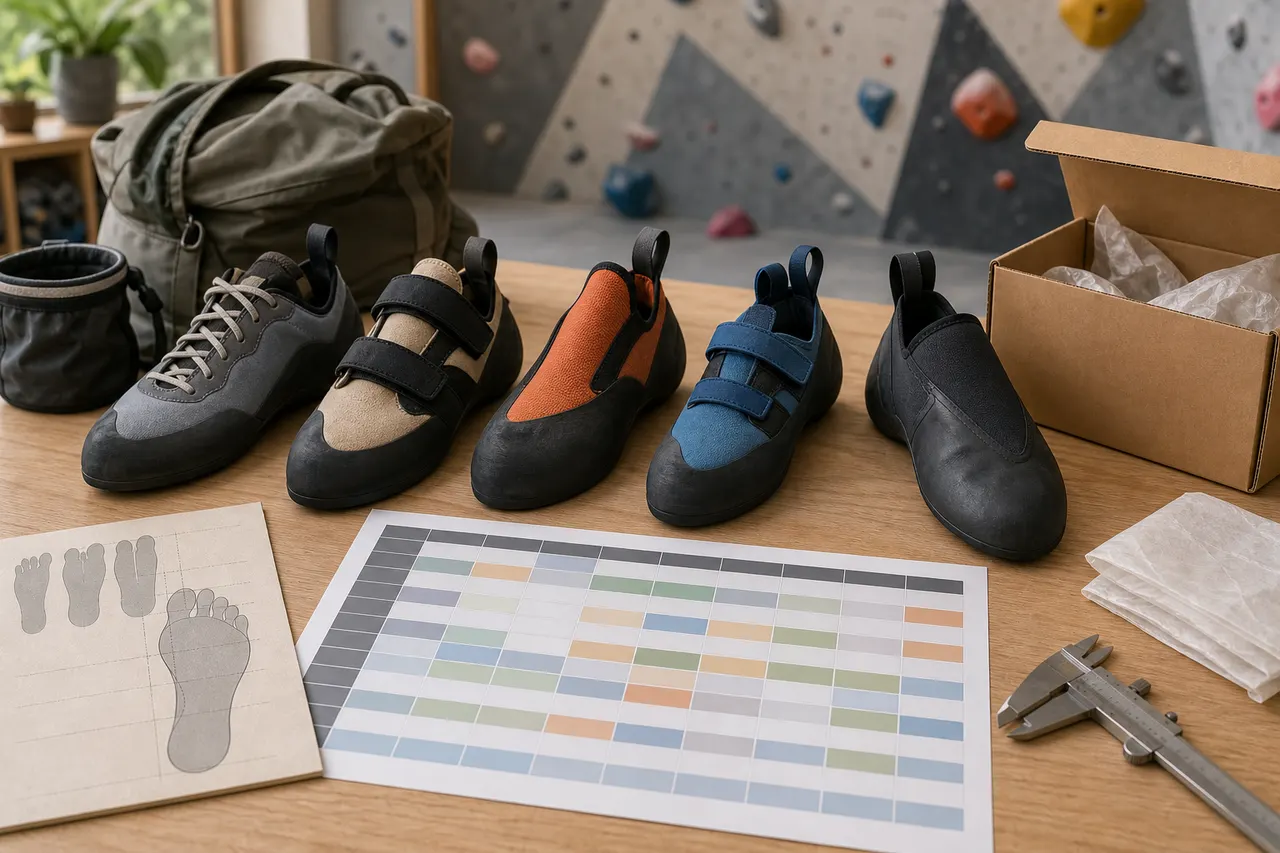
Narrow down candidates step by step based on foot shape, closure type, and climbing scenario.
First Define Climbing Scenario and Acceptable Fit Level
Write down your intended use before looking at specific models. Otherwise, it's easy to be tempted by aggressive toe shapes, eye-catching colors, or low prices while ignoring the support and comfort you actually need.
Start by categorizing your main scenario into one of the following:
Indoor bouldering: frequent on/off, usually prioritizes fit, toe control, and quick adjustments.
Indoor routes: longer wear time per session, should balance precision and comfort.
Outdoor sport climbing: needs judgment based on wall angle, route length, and foothold types.
Crack climbing: upper construction, lace placement, and instep pressure are more important.
Beginner training or long wear: don't choose overly tight or overly downturned models just for a "professional look." 🧗
Then record your acceptable fit level: comfort fit, performance fit, or competition-tight fit. Climbing shoes normally shouldn't slip noticeably inside, but "more pain equals more professional" is not a reliable rule. Persistent toe numbness, forced joint folding, or sharp heel pressure all indicate that the candidate size or last may be unsuitable.
What the kakobuy Spreadsheet Can and Cannot Prove
The Spreadsheet is good for organizing candidate links and visible specs, but names, sizes, or images in the table may be outdated, incompletely entered, or inconsistent with the seller's current options. best-kako-buy.com can help users build a filtering path, but should not be considered a climbing shoe manufacturer, seller promise, or performance certification body.
It's recommended to create the following fields for each candidate:
Field | What to record | Where to double-check |
|---|---|---|
Product identification | Product name, color, style number, link | Current product page and order options |
Foot shape info | Forefoot width, instep height, heel width | Seller's size notes and last description |
Closure structure | Velcro, laces, or slip-on | Product images, spec options, and QC photos |
Climbing use | Bouldering, routes, cracks, or mixed training | Product description, not just from appearance |
Size basis | Chinese size, EU size, millimeter or foot length | Size chart, measurement method and unit |
Timeliness info | Price, stock, color, return/exchange conditions | Page on actual order date |
The Spreadsheet can prove that "the table once recorded certain information," but it cannot alone prove that the product is still in stock, sizes are truly consistent, materials are a certain compound, brand authenticity, or sole performance. Without clear product samples and current page evidence, do not write "authentic," "best," "high-performance," or similar conclusions.
Price, stock, size options, product link, domestic shipping, and return/exchange conditions are all highly volatile information. They should be re-verified on the actual order date and the verification date should be filled in the table. This article does not provide specific selling prices or stock conclusions without confirmation from the current product page.
Filter Candidates by Foot Shape, Last, and Toe Profile
Measure both feet before choosing shoes. It's recommended to measure the length and widest part of both feet barefoot when your feet are relatively stable during the day, and use the larger foot as the initial reference. Measurements should be recorded in millimeters, not just "I usually wear size 42." 📏
When filtering, focus on:
Wide forefoot: prioritize candidates with enough lateral space in the toe box; be cautious of obviously pointed narrow profiles.
High instep: check tongue opening, strap length, and lace adjustment range.
Narrow heel: observe if the heel cup narrows, but don't judge fit based only on front product images.
Longer second toe: avoid inferring toe box space from big toe position alone.
Significant difference between left and right feet: use the larger foot as baseline, and also check if the smaller foot may slide in the heel cup.
When last information is missing, mark the item as "unknown" and don't fill it in based on brand impression. Toe box upturn, downturn, or asymmetric profile can be described from images, but cannot directly assert comfort or suitability for all steep routes.
Compare Velcro, Lace-up, and Slip-on Closures
Closure type affects adjustment range and on/off efficiency but does not automatically determine the shoe's technical level.
Closure type | Main advantages | Issues to watch | Scenarios to prioritize |
|---|---|---|---|
Velcro | Quick on/off, easy to loosen during breaks | Strap position fixed, limited local adjustment | Indoor bouldering, frequent on/off |
Lace-up | Adjustable tension in different zones | Slower on/off, lace area may wear | Long routes, need fine instep adjustment |
Slip-on | Simple structure, less upper interference | Small adjustment range, elasticity changes more critical | Users familiar with their size and last |
When checking the Spreadsheet, don't just record "Velcro." Also record strap count, direction, attachment points, and whether different colors of the same product share the same structure. If the seller mixes images from multiple models, mark the structural inconsistency as a pending question.
Narrow Down by Sole Stiffness and Climbing Use
Sole stiffness cannot be reliably judged from photos alone. If the product description does not specify structure or material information, mark it as "unverified" instead of guessing from sole thickness or appearance.
General filtering logic can be used as follows:
When needing support on small footholds, prioritize candidates with clear support structure and more complete sole information.
When needing friction or adapting to curved surfaces, focus on the sole flex zone and forefoot structure, but final performance still requires actual use verification.
When frequently heel hooking, check if the heel rubber coverage and attachment structure are intact.
When frequently toe hooking, check if the front upper has corresponding coverage area, and confirm it doesn't hinder the closure structure.
For long training sessions, prioritize comfort and sustainable wear time over aggressive profiles.
If two candidates both lack stiffness, thickness, or material evidence, you cannot judge one as performing better just because it looks more "professional." In that case, the more reasonable approach is to keep the one with complete information, or ask the seller for verifiable specs.
Verify Size Markings, Product Links, and Specs Before Ordering
After entering the product page, re-check if the Spreadsheet matches the current page. It's recommended to classify the verification result as "confirmed consistent," "conflict exists," or "insufficient information." 🔍
Check item by item before ordering:
Link opens normally, and the page is a specific product, not a search page, category page, or dead page.
Product name, main image, and style options point to the same pair of shoes.
Size unit is clear; don't confuse EU size, Chinese size, foot length in millimeters, or insole length.
The selected color is not linked to a different last, closure structure, or sole version.
Current price, stock, seller's domestic shipping, and return/exchange conditions are reconfirmed as of the order date.
When asking the seller, use your actual foot length, width, and fit preference; don't ask them to guess based only on your everyday shoe size.
According to current platform information, kakobuy's total cost may include product price, domestic shipping within mainland China, international shipping, and applicable customs fees; international shipping is also affected by weight, route, and destination. Specific amounts and available routes must be based on the current page before submitting the parcel, not derived from the shoe's product price.
Returns and exchanges for climbing shoes may be subject to seller conditions and platform processing windows. Any return/exchange deadlines, exceptions, or warehouse operation requirements should be verified separately on the order date and after warehousing. If size risk is high, do not request removal of tags, packaging, or accessories before confirming you will keep the product, as it may affect possible return/exchange eligibility.
Use QC Photos to Check Left/Right Pair, Bonding, and Closure Structure
kakobuy's warehouse inspection is suitable for checking style, quantity, color, size markings, and visible appearance, but it cannot prove the shoes fit or substitute for climbing performance testing. After receiving QC photos, complete the check within the allowed processing time. 📦
It's recommended to review in a fixed order:
Pairing: Are the left and right shoes the same color, size, and style?
Size markings: Are the shoe box, hang tag, and inner label consistent, and are the photos clear enough to read?
Toe profile: Are there obvious asymmetries or abnormal deformations between left and right shoes?
Bonding areas: Are there visible large-area separations, excessive glue, or misalignment along the upper-sole edge?
Heel cup: Are the left and right heights and profiles significantly different?
Velcro: Are strap direction, count, stitching points, and adhesive areas intact?
Laces: Are eyelets, laces, and tongue complete, and is the left-right arrangement consistent?
Slip-on structure: Are there obvious tears, loose threads, or abnormal wrinkles in the elastic areas?
Ordinary QC photos may not show insole length, forefoot width, sole stiffness, fine cracks, or internal stitching. If key positions are blocked, request additional photos or measurements for that specific issue, rather than treating "not photographed" as "no problem."
When identifying doubts, describe the issue specifically, e.g., "Please take a supplementary photo of the left and right shoe inner size labels placed in the same frame," rather than vaguely asking "Is the quality good?" The warehouse can assist in checking visible information, but should not be asked to guarantee authenticity, durability, or actual climbing performance.
Organize Candidates and Submit Final Checklist
In the end, don't keep a dozen candidates that can't be compared. A more practical approach is to keep two or three, and write down for each the reason for keeping, unconfirmed items, and elimination conditions.
Complete the following checks before submitting the order:
One primary climbing scenario and acceptable fit level determined.
Left and right foot length, width, and measurement unit recorded.
No obvious conflict between candidate last and foot shape confirmed.
Closure types compared, not just appearance.
Unverifiable sole stiffness, materials, and performance marked as unknown.
Product link valid, options, sizes, and images mutually consistent.
Price, stock, domestic shipping, and return/exchange conditions verified as of the actual order date.
QC photos cover left/right pair, labels, toe box, heel cup, bonding, and closure structure.
Taxes, import restrictions, and declaration documents applicable in the destination country understood, and prepared to declare truthfully.
No unboxing operations that may affect returns/exchanges performed before confirming the product. ✅
This method does not promise a fixed savings amount. Calculable savings should be "the difference between the delivered cost of eliminated candidates and the final candidate's delivered cost," minus additional QC, return/exchange, or reshipping fees; without current price and shipping samples, a reliable fixed savings amount is incalculable, not arbitrarily estimated.
Increased risks mainly come from inability to try on, inconsistent size systems, outdated page information, and QC only checking visible appearance. This process is suitable for buyers willing to measure their feet, check item by item, and accept the uncertainties of cross-border purchases; it is not recommended for those with foot injuries, who must try on precisely, for whom return/exchange costs are unacceptable, or who need certain guarantees of brand authenticity and professional performance.
This article was compiled by the Panda-Buy Editorial Desk's automated editing process, based on structured platform information and a verifiable filtering method, and does not claim any person purchased, tried on, or tested any candidate shoe model. Product and platform time-sensitive information must be reconfirmed on the actual order date.
Agent Platform Shopping FAQ
1. How to evaluate product quality on kakobuy?
When evaluating product quality, look at QC photos, not just factory-provided images, because factory images are often retouched. Use QC photos to confirm whether the product details meet your specific requirements before deciding to actually buy. Also, avoid buying extremely low-priced items, as their quality is usually not good.
2. What should I pay attention to when first using the kakobuy agent platform?
First-time users accessing the kakobuy agent through the spreadsheet usually receive a new user shipping discount package. At the same time, you should review the step-by-step shopping tutorial guide for beginners.
Browse our latest products and find your next favorite item.